
6 years after it’s release and 12 years after the events in question, I finally finished reading Permanent Record by Edward Snowden. I’m late to the party yes, and events, and the world have changed drastically in the mean time, but if you haven’t yet made the time to read Edward Snowden’s side of the story, or at least the version he is trying to sell/tell to the public, I think you should.
Our private selves are ever more public – the data we are producing and broadcasting to the world both knowingly and unknowingly has increased substantially in recent years. The ability of actors – be they from a hostile state, a company monetizing your data, or a political movement seeking to capitalize off of your emotions – to utilize that data to their own ends, especially with the rise of AI tools, would be unimaginable to anyone in 2013. Snowden tells his story, but also the story of a generation that lived through the breakdown of the post WW2 geopolitical order, and the twin economic crises and technological revolutions that define our age. The man, his actions, their implications, and his story warrant a closer examination.
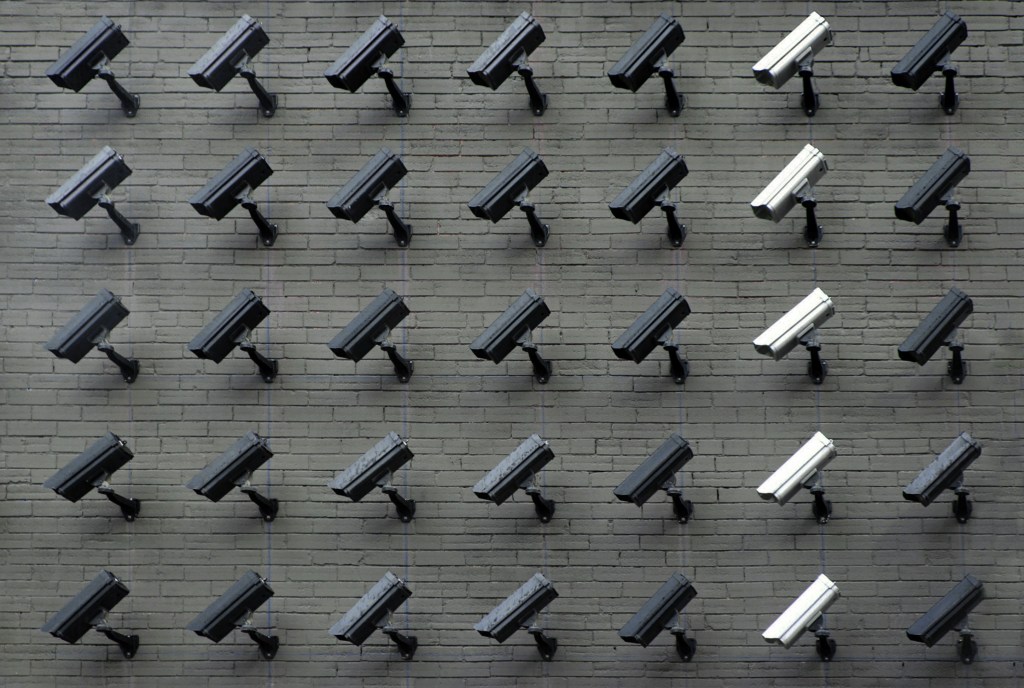
I’ve come across several news stories this morning about people getting fired for posts they’ve made in the aftermath of the murder of Charlie Kirk. I can’t help but wonder if people could also be getting fired (either in this particular circumstance or at some point in the future, from government or private employers) for the private thoughts they share amongst friends or family on any given situation. It’s entirely possible; one of the news story talks about a website dedicated to exposing Charlie Kirk murder reactions having “received nearly 30,000 submissions,” according to a message on the site’s front page two days after the event in question – no mention of how many of these submissions are public posts or private messages. I guess we will soon find out: “This website will soon be converted into a searchable database of all 30,000 submissions, filterable by general location and job industry.”
The question of how our public and private reactions can be acted upon is global in-scale. Earlier in the week, news broke of Operation Salt Typhoon, a years-long coordinated assault allegedly orchestrated by Chinese state actors that infiltrated major telecommunications companies and targeted more than 80 countries and may have stolen information from nearly every citizen in everyone of those countries. Could our private thoughts and communications now be available for the scrutiny of a foreign state, for whatever purpose they deem necessary in pursuing their interests at our expense?

Truth be told, when the Snowden revelations became public knowledge in 2013, I read it with a level of interest and importance, but don’t remember it causing a massive shift in my behaviour, thinking, or outlook on the world. 2013 seems like such a simple time from the chaos of 2025. Obama was president. We were all on Facebook, your feed showed you what your friends were up to instead of bombarding you with ads, and no one over 40 was on it. The world was still a messy place as conflict raged in parts of the globe like the Middle East, but the things we’ve experience since then truly feel like they are in the domain of science fiction if we look at 2025 from the vantage point of 2013. Before Trump, before Cambridge Analytica, before COVID, before the largest land war in Europe since WW2, before events in the Middle East brought the world to the edge yet again, before bitcoin billionaires, before Xi Jinping, before ChatGPT…before so many of the complex events and forces shaping the global stage today had made their entry. A simpler time, we can all agree, but definitely not without its own complexities and dramas, one of which was the emergence onto the global stage and public consciousness of Edward Snowden and the story he told.
I didn’t know much about Edward Snowden, the man, before giving his book a read. I recall having watched CitizenFour, the documentary made by the journalists who facilitated his revelations many years ago. I recall having enjoyed Snowden, the Hollywood version of his story starring Joseph Gordon-Levitt. I don’t recall having learned much about Snowden, the man, and the forces that shaped his thinking and actions, and surprisingly, that remains true after having read the book. He kind of admits this himself:
The fact is, no one with a biography like mine ever comes comfortably to autobiography. It’s hard to have spent so much of my life trying to avoid identification, only to turn around completely and share “personal disclosures” in a book. The Intelligence Community tries to inculcate in its workers a baseline anonymity, a sort of blank-page personality upon which to inscribe secrecy and the art of imposture.
Having said that, the book wasn’t devoid of revelations and I do have some improved idea of who he was and why he did what he did, although I found it interesting we learn almost nothing (perhaps by design) about his parents and how they shape him other than that they were lifelong government employees with security clearances and they can trace their origins in America back to pilgrims on the Mayflower like a family in a James Michener novel.
Snowden tells a compelling coming-of-age story about a life unfolding amidst the rise of the internet, the surveillance state, the aftermath of 9/11, global War on Terror, and the rise of the surveillance state and tech world we know today. Snowden being only a few years older than me, I think anyone who lived through those times and remembers those events and their impact on our childhoods and our sense of the world will appreciate his writing about his early life. In a sense, he is telling us the personal story of the universal experience of the parallel revolutions those in our age bracket have lived through: the re-ordering of the global geopolitical order after the Cold War and 9/11 and its aftermath, the breakdown of the economic systems that our parents generation benefited from in the Western world, and the massive disruption of technological innovation increasing faster than our capability to control it.
In reading Permanent Record, I could see someone who came of age in what he idealizes as the golden age of the internet, while institutions that shaped his early life (the marriage of his parents, the US government civil service, the very architecture of global security after the end of the cold war) all fell apart. I could see how that, combined with the loss of public trust in US institutions in the aftermath of the Iraq War, and his short stint in the US Army that ended in injury all compounded to lead him down the path of doubt and action, ending with him doing what he did.
He strikes me as a kind of charming nerd, the kind of guy who if I worked with I would eventually become friends with. His random interest in Japanese culture and anime, history, and the constitution are the kind of things lunch table conversations with co-workers you know but don’t know that well are made of. Basically, my impression after reading the book was that he did what he did because he thought what the NSA was doing was wrong largely because he believed that because it eventually could be used for nefarious aims, it somehow would. He comes across as equal parts idealist, equal parts disillusioned veteran of the technological reality he played some small part in building and shaping, who was placed by the circumstances of his life and his ideas about the world in a very unique situation in which he felt compelled to act.
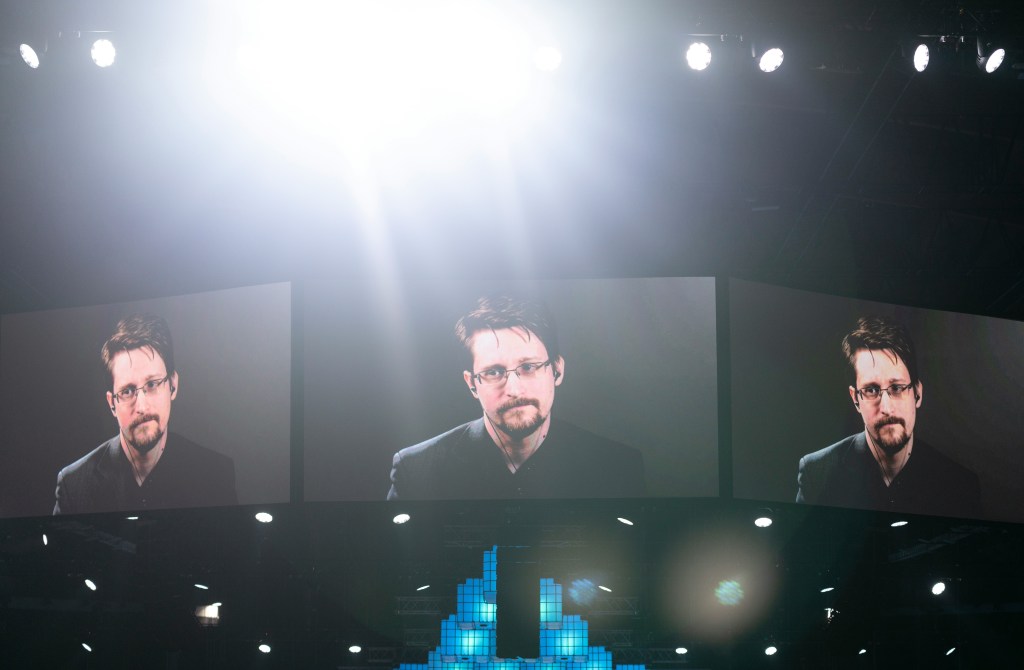
The insights on the nature of his role in the intelligence community and its evolution in the age of increasing neo-liberalism and the dominance of the private sector over the civil service were particularly interesting. As the functions of state and government come under increasing attack in much of the Western world and face an even greater hollowing out of their once foundational institutions, and more and more of the once critical functions in the intelligence community and other key state institutions get fulfilled by private industry, and that brings with it a huge amount of risk the key parties making these decisions either don’t appreciate, or are comfortable taking in the name of profit:
But I came into the IC during a different age. By the time I arrived, the sincerity of public service had given way to the greed of the private sector, and the sacred compact of the soldier, officer and career civil servant was being replaced by the unholy bargain of Homo Contractus, the primary specifies of US Government 2.0. This create was not a sworn servant but a transient worker, whose patriotism was incentivized by a better paycheck and for whom the federal government was less the ultimate authority than the ultimate client
Even in those simpler times of 2013, I missed the crux of his revelations. It wasn’t so much that the NSA was gathering all the electronic communications of hundreds of millions of Americans and citizens of nations around the world, it was what they were able to do with it:
I sat at a terminal from which I had practically unlimited access to the communications of nearly every man, woman, and child on earth who’d ever dialed a phone or touched a computer. Among those people were about 320 million of my fellow American citizens, who in the regular conduct of their everyday lives were being surveilled in gross contravention of not just the Constitution of the United States, but the basic values of any free society. It was, simply put, the closest thing to science fiction I’ve ever seen in science fact: an interface that allows you to type in pretty much anyone’s address, telephone number, or IP address, and then basically go through the recent history of their online activity. In some cases, you could even play back recordings of their online sessions, so that the screen you’d be looking at was their screen, whatever was on their desktop.
Somehow in all the reporting on Snowden, which I admit I followed rather topically rather than in any close detail, the above escaped me. It was not so much about the collection of the data, but about what could be done with it. The above is shocking enough to read today, but one of the thoughts that has been circling my mind since finishing the book: if this is what the intelligence community and tech world had the access and capability to do in 2013, imagine what they could do now?

Snowden’s actions did changed the public conversation and the way the internet operates in pretty foundational ways. Encryption has become a default – that’s changed the fundamentals of how we communicate and how the internet is built. We all operate with the knowledge that nothing we say or type is truly private – that’s changed what we say and who we say it to. His book provides some insight into how and why he did what he did, and why it all still matters today:
Ultimately, saying that you don’t care about privacy because you have nothing to hide is no different from saying you don’t care about freedom of speech because you have nothing to say. Or that you don’t care about freedom of the press because you don’t like to read. Or that you don’t care about freedom of religion because you don’t believe in God. Or that you don’t care about the freedom to peaceably assemble because you’re a lazy, antisocial agoraphobe. Just because this or that freedom might not have meaning to you today doesn’t mean that it doesn’t or won’t have meaning tomorrow, to you, or to your neighbor—or to the crowds of principled dissidents I was following on my phone who were protesting halfway across the planet, hoping to gain just a fraction of the freedoms that my country was busily dismantling.
His argument on the importance of privacy is eloquently put, but having read his book now, in 2025, I’m basically more convinced of the need for privacy and the ability to exercise it for the simple fact that, using any and all data they have available to them, governments and political forces are trying to manipulate us, big corporations are trying to profit off of us, and criminals are trying to rip us off. Technological progress has made all of that infinitely easier to do in 2025 than it was in 2013.
 The Roman Dispatch
Leave a comment